
The Moms’ Proactive Guide to Survive Flu Season 2025
School is back in full swing, which means permission slips, sports practices, and… endless germs. If it feels like the flu makes the rounds every year, but in recent years, the severity and duration have been cause for alarm. According to a CDC report, more children got much sicker, stayed sick longer and even passed away due to flu-related complications in 2023-2024 than in the previous 15 years.
That doesn’t mean it’s time to panic. With the right mix of preparation, prevention, and practical know-how, you can keep your household running (mostly) smoothly, even during the dreaded cold and flu season.
When is Flu Season in Arizona?
We tend to think that flu season only hits during the dead of winter. However, in the U.S., flu activity can start as early as October, usually peaks between December and February, and sometimes lingers into May. That means it can stretch for six to eight months, depending on how the strains circulate. In warmer climates like Arizona, the flu season may not last as long; however, we still need to be mindful of germs and do our part to prevent the spread.
So, if you’re wondering, “What months are flu season?”, the answer is: October through May, and peak flu season takes place during the winter holidays. And yes, for moms, that unfortunately overlaps perfectly with school activities and already-stressful family holiday plans.
When Does Flu Season End?
There’s no official end date for flu season, but the CDC typically considers flu activity to wind down by late spring. Generally, by the time school starts to wind down and you’re preparing for summer, flu circulation is pretty low. That doesn’t mean you cannot get the flu year-round, because you can.
Your best bet is to be proactive with your flu preparation: Get the vaccine, repeatedly clean and sanitize every surface and keep an arsenal of natural flu remedies on hand.
Defending Your Family With The Flu Shot
One of the best prevention methods is the annual flu shot. Everyone in your household age six months or older should receive the flu vaccine before the end of October for optimal protection (though it’s okay to get it later).
Why that timing? It takes about two weeks for antibodies to build up after the vaccine. Vaccinating too late means your kids may already be exposed at school, while too early (such as over the summer months) risks waning protection before the season really kicks off. The U.S. Food & Drug Administration (FDA) recommends the trivalent seasonal influenza vaccines that include two influenza A subtype viruses (H1N1 and H3N2) and one influenza type B virus for the 2025/2026 season.
Tips for a Successful Flu Shot For Kids
Many adults have a fear of needles, so it’s no surprise that it can be challenging to wrangle kids for a flu shot. Here are some tips to get it done with as few tears as possible:
- Pair it with other appointments, like their annual sports physical
- Prepare them in advance and be honest with them–surprising them could cause a major meltdown. Explain the shot to kids in language they understand
- Bring a distraction like their favorite toy or an episode of a kids’ show on your phone
There may be some side effects after the flu shot, like a mild fever or a bit of soreness at the injection site. Don’t be alarmed, it’s perfectly normal.
Avoid The Flu With These Everyday Practices
In addition to ensuring your entire family is vaccinated, you should also take specific safety precautions. The name of the game is to keep things as clean as possible, focusing on common family hotspots like the kitchen, bathrooms, and living room.
Enforce a thorough, family-wide hand washing routine
Encourage kids to wash their hands frequently and with warm, soapy water for at least 20 seconds. A fun trick is to sing the entire ABC song, which takes about 20 seconds, making it feel less like a chore.
Disinfect and Keep High-Touch Surface Areas Clean
We know you’re a busy mom, so don’t think you have to deep clean every nook and cranny of your home. Instead, focus on areas and surfaces where you can usually find little hands: door knobs, countertops, tables, their toys, etc. Use an antibacterial cleaner to fight germs, just be careful if you have pets or babies/toddlers who may put things in their mouths.
Cover Your Mouth
Along with hand washing, make it a point to always cover your coughs and sneezes with the crook of your elbow. The more your children see you do it, the more likely they are to do the same.
What to Do if Someone Gets Sick
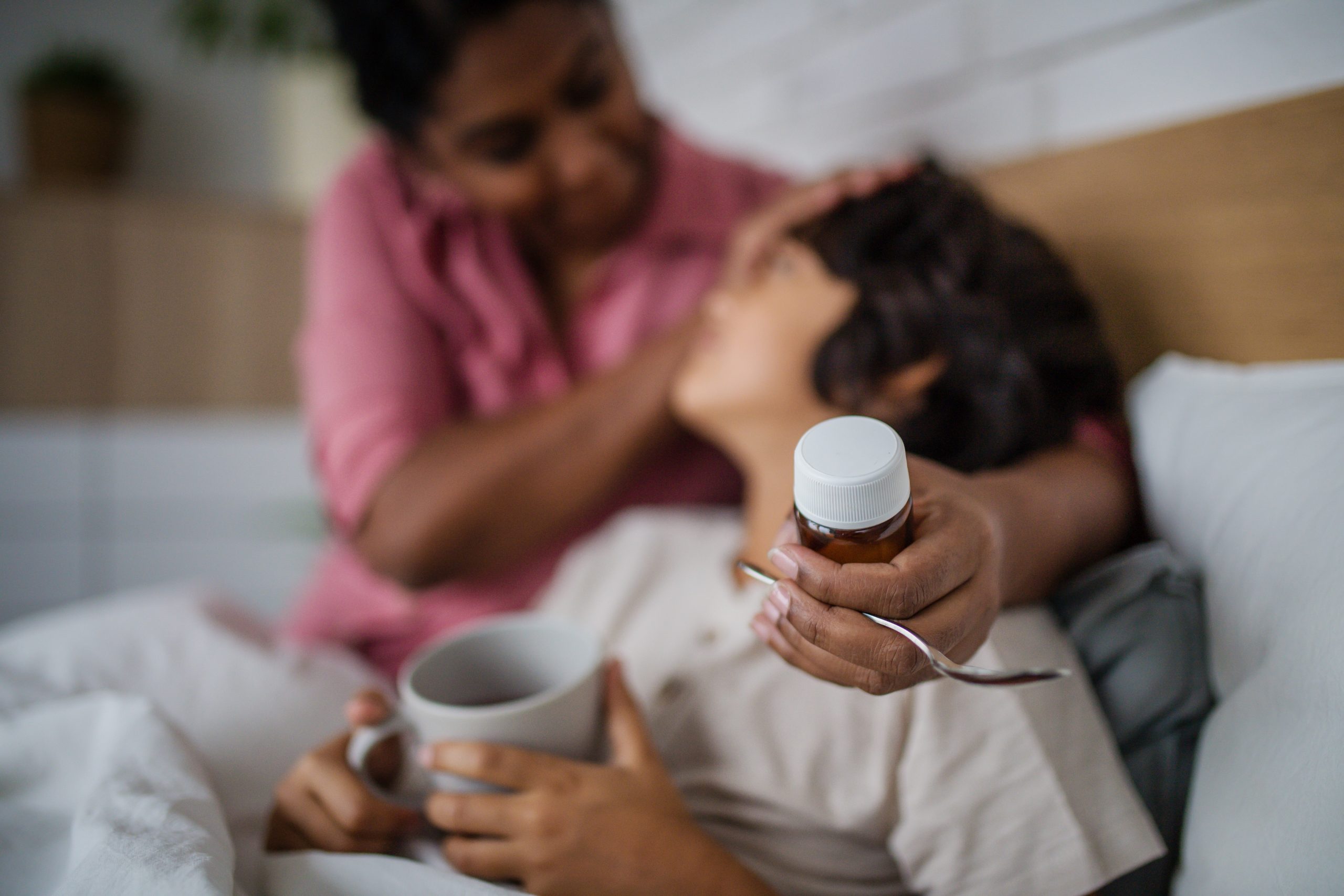
Even with the flu shot and prevention measures, someone in your household may still contract the flu. It happens! Prepare yourself ahead of time to minimize the spread and shorten the duration of your illness.
Have your Cold and Flu Essentials Ready in Advance
Before the season begins, take stock of what you have in your first aid kit. When flu season hits, you don’t want to be scrambling to find a thermometer at 10 p.m. Here’s what to stock up on now:
- Thermometer (preferably digital and fast)
- Children’s acetaminophen or ibuprofen (never give aspirin to kids as it can increase the risk of Reye’s syndrome, a rare but deadly illness that can lead to brain and liver damage)
- Electrolyte drink powders (kid-friendly versions or make a DIY version with juice and salt)
- Humidifier (relieves congestion and keeps airways moist)
- Honey (for kids over age 1—it can help soothe coughs and sore throats)
- Plenty of face tissues, hand soap, and sanitizer
- Quick and easy comfort foods (applesauce, soup, popsicles)
Think of it as your “sick day toolkit.” Having the essentials in advance can make the difference between a night of running from store to store with a sick kid vs snuggling your little one in their bed as comfortably as possible.
Reducing Spread in a Busy Household
If you’ve got multiple daycare and school-aged kids, you know how quickly the flu can run rampant through the house. While you can’t stop everything, you can slow it down by enforcing these flu quarantine rules for kids:
- Masking at home: If one child is sick, consider having them wear a mask when around siblings.
- Separate towels & cups: No sharing, even “just for a sip.”
- High-touch surfaces: Wipe down doorknobs, remotes, and game controllers daily.
- Ventilation: Open windows for a few minutes each day, even in cold weather.
- Laundry routine: Rotate pillowcases and blankets more often during illness.
Think of it as creating sick and healthy “zones” in your house so your ill kid(s) can recover and your healthy family members don’t run the risk of getting sick themselves, especially if you are pregnant or have any family members who are immunocompromised.
Keep Sick Kids Home
Missing work or other activities can disrupt your family’s everyday schedule, but it’s essential to keep sick kids home at least until they are fever-free for 24 hours without the use of medication. It’s more than a common courtesy; it helps minimize outbreaks.
The rule of thumb is that if your child has a fever, vomiting, diarrhea, or severe cough? Keep them home. Remember, sending a contagious child to school often means you’ll be juggling more sick days later when the whole class (and your household) gets it.
When to Call The Doctor
The cold and flu can share similarities with other illnesses that are much more severe, such as RSV, strep throat or Covid-19. If your child has symptoms beyond the standard cough, fatigue, body aches and fever or displays any of the below, call your pediatrician ASAP:
- Breathing trouble or rapid breathing
- Severe dehydration (no urination for 8+ hours, dry mouth, no tears)
- Lethargy or unresponsiveness
- High fever not responding to meds
Get The Flu Vaccine & Support in Phoenix, AZ
Flu season is long, messy, and exhausting. But you’re not powerless. By prepping your home, staying on top of vaccines, and knowing when to call the doctor, you’re stacking the deck in your family’s favor.
Most importantly, don’t neglect your own health! Taking care of your own health is part of taking care of your family. The best way to start? Schedule an appointment with a Genesis OB/GYN provider today, and get your flu shot. Protecting yourself means protecting the people you love most.


