
Dear Doctor: I am Nervous About Getting a 3D Mammography. Is it Safe?
Dear Doctor,
At my last appointment, my OB/GYN mentioned that I have dense breast tissue and recommended I get a 3D mammography instead of the regular kind. I’ve been reading a little about it, but there’s so much conflicting information out there, and now I have concerns.
Is 3D mammography safe? I saw that it uses X-rays like the regular mammogram, but I wasn’t sure if it means I’ll be getting more radiation. Also, since I don’t have a family history of breast cancer, I’m wondering if this type of screening is still necessary for me, or if it’s just better for people who are considered high risk.
I trust my doctor, I just want to understand more about why it’s the right choice for me, and if there’s anything different I should expect during the test.
Thanks for your time and guidance!
Best,
Worried and Wondering
Dear Worried & Wondering,
Thank you for your thoughtful letter. It’s absolutely normal to be concerned about any new technology or medical procedure, and we encourage you asking whatever questions you need to make you feel more comfortable. As doctors, your care and comfort are of the utmost importance to us.
I’m glad to explain why I recommended this option for you.
So, what is a 3D mammogram? A 3D mammogram, also called digital breast tomosynthesis, creates a three-dimensional image of your breast tissue. Unlike a traditional mammogram, which takes just two images of each breast, a 3D exam takes multiple pictures from different angles. These are combined into a layered image, giving us a clearer view.
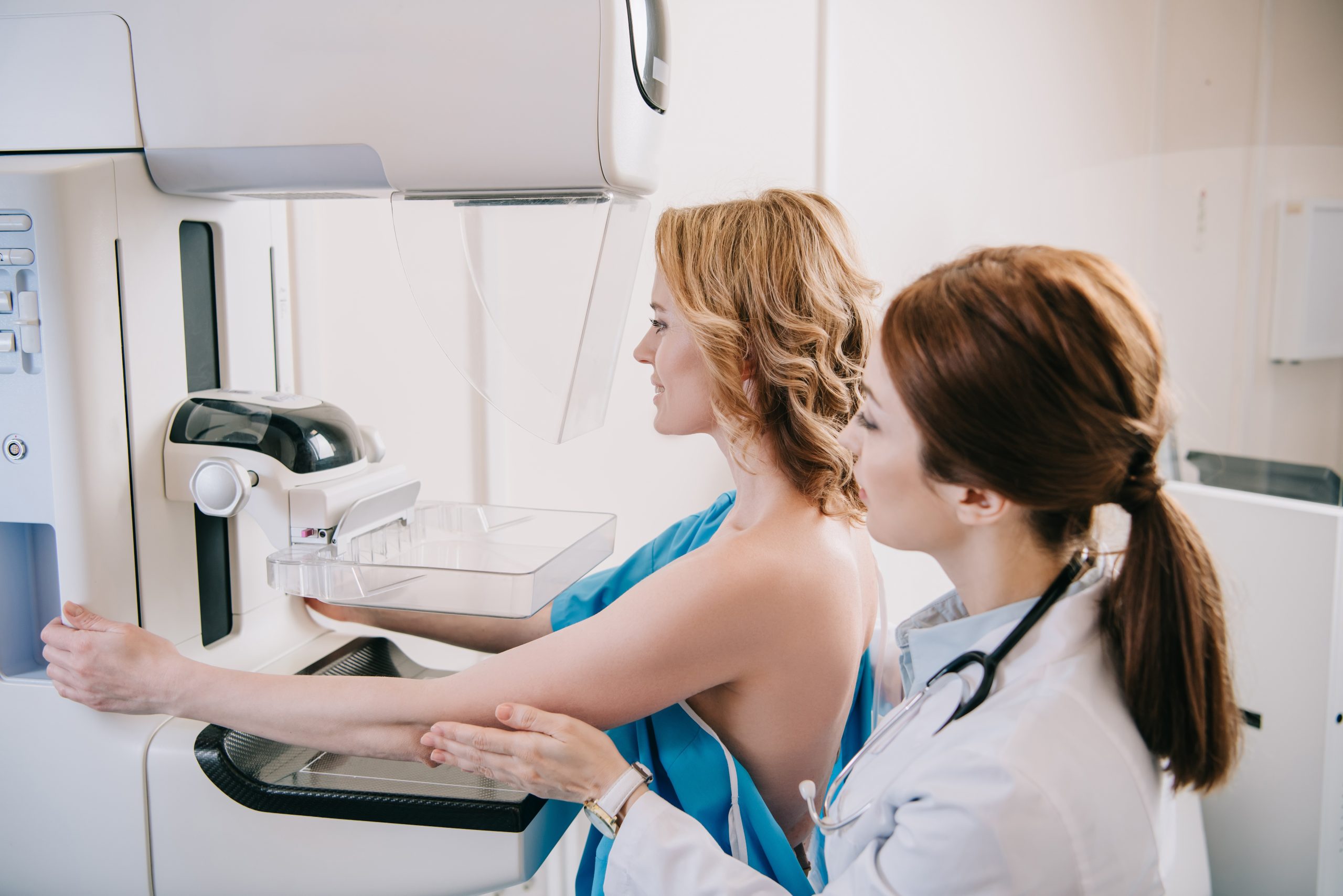
From your perspective, the experience is the same as a regular mammogram—the machine and positioning are identical. The only difference is the more advanced technology working behind the scenes.
The difference between 2D vs 3D mammograms is really the level of detail in the results. Instead of flat images that 2D produces, the 3D exam uses an X-ray arm that moves in an arc, capturing hundreds of images.
This level of detail has tangible benefits:
- Detects 41% more invasive breast cancer
- Reduces callbacks by about 15%
- Results in fewer false positives
That means better accuracy and less stress for you. There’s some concern about radiation, and, yes, tomosynthesis uses slightly more radiation than a traditional mammogram. However, it’s still very low and well within FDA-approved limits.
And keep in mind that it’s minimal exposure, as most women at average risk ideally start screening at age 40, with an annual mammogram. If you have a higher risk due to family history, past abnormal mammograms, or genetic factors, we may recommend more frequent screening. If there’s a concern that additional exams will increase your radiation risk, speak with your Genesis provider.
Since you have dense breast tissue, a 3D mammogram for dense breast tissue is particularly useful. Dense tissue and abnormalities both appear white on a traditional 2D mammogram, which can make cancer harder to detect. With 3D, we can “slice through” layers of tissue and see areas more clearly, improving accuracy and peace of mind.
In summary, A 3D mammogram is a safe and effective tool that improves cancer detection, especially for women with dense breasts. It’s a quick, in-office procedure that helps us catch any changes or concerns as early as possible.
If you’re ready, request an appointment for your next mammogram at a Genesis location near you. We offer 3D mammography at convenient centers across major Arizona cities, including Phoenix, Tucson, Mesa, Scottsdale, and Chandler.
Wishing you good health,
Dr. Anna Nelson-Moseke
OB/GYN, Genesis Women’s Health
Anna Nelson-Moseke, MD, FACOG, is a board-certified OB/GYN and the Medical Director of Genesis OB-GYN. She practices at Pueblo in Tucson, AZ.


